Why retailers are moving away from traditional incense sticks
Key takeaway: more retailers are looking beyond traditional incense sticks because they want products that feel more distinctive, more aligned with premium retail environments and easier to integrate into a curated sensory experience. For many stores, the shift is not only about fragrance, but about format, presentation, perceived quality and the ability to offer something less standardized.
For a long time, incense sticks have been the default reference in the category. They are familiar, widely distributed and immediately recognizable to consumers. But in many retail environments, especially concept stores, wellness boutiques and premium lifestyle spaces, that familiarity is no longer always an advantage.
Retailers are increasingly looking for alternatives that feel more curated, more visually coherent and more aligned with a higher-end customer experience. This is one reason why other formats, including artisan incense made from fragrance-infused natural wood chips used on a candle burner, are attracting more attention from professional buyers.
- Why traditional incense sticks no longer fit every retail environment
- What retailers are looking for instead
- The format of the product now matters more
- Why premium stores need more than a familiar category
- How alternative incense formats support better positioning
- From standardized products to a more curated offer
- FAQ
Why traditional incense sticks no longer fit every retail environment
Traditional incense sticks still have a place in the market, but they do not always match the expectations of every retail concept. In many cases, the issue is not that the format is unknown or ineffective, but that it has become too standard for stores that want to differentiate more clearly.
They are often perceived as a generic format
Because incense sticks are so common, they can sometimes feel interchangeable from one store to another. For retailers trying to build a more curated atmosphere, this lack of distinction can weaken the overall offer. A product that already exists everywhere is often harder to turn into a real point of difference.
That does not make incense sticks irrelevant, but it explains why some stores no longer see them as the strongest expression of a premium or more editorial fragrance category.
The visual language may not fit every store identity
Concept stores, premium boutiques and certain wellness spaces often work through a highly curated visual identity. In that context, product format matters. If the incense offer feels too standardized or too disconnected from the atmosphere of the store, it may not integrate naturally into the broader retail universe.
Retailers are therefore paying more attention not only to the scent itself, but also to how the product looks, feels and is experienced in-store.
What retailers are looking for instead
As the category evolves, retailers are not simply looking for “another kind of incense.” They are looking for products that support a different kind of retail experience.
More distinction and more coherence
Many stores want fragrance products that feel more specific to their own identity. Instead of relying on familiar mass-market formats, they are looking for references that can contribute to a stronger atmosphere and a more curated product narrative.
This often leads them toward alternatives that feel more artisanal, more visually distinctive or more aligned with a softer and more design-conscious customer experience.
More control over positioning
Retailers also want products they can position more clearly inside their store. A category becomes stronger when the team can explain it well, integrate it visually and make it feel coherent with the rest of the assortment. Familiarity alone is no longer enough. The product also needs to support the store’s desired image.
That is one reason why many businesses now compare different sourcing models and formats more carefully before building the category.
The format of the product now matters more
In premium retail, the format of the incense is now part of the value proposition itself. The product is judged not only by its scent, but also by the way it is used, displayed and perceived.
Materiality has become part of the experience
When customers can see the raw material, understand the product more directly and connect it with a more artisanal process, the category often feels more credible and more elevated. The visible substance of the product contributes to perceived quality.
This is one reason alternative formats are attracting attention: they create a different relationship to the incense itself.
Gentler diffusion can support a different atmosphere
Some retailers also prefer formats associated with a softer diffusion logic, especially in calmer or more design-led environments. A gentler fragrance release may feel more compatible with certain boutiques than a format associated with direct burning as the primary visual ritual.
That difference in perception matters in stores where the overall customer experience is built around softness, refinement and control.
Why premium stores need more than a familiar category
A premium retail environment often requires more than recognizability. It requires consistency, atmosphere and a product that feels intentionally selected.
Retailers want products that strengthen store identity
In a curated store, every product category contributes to the overall positioning. Incense therefore has to do more than sell on habit. It has to reinforce the emotional and aesthetic world of the business.
That is why retailers may move away from conventional formats when those formats no longer express the level of distinction they want.
Curated ranges are replacing generic category building
Rather than simply adding any incense reference to the shelves, many retailers now think in terms of range coherence, scent direction and category identity. This approach naturally pushes them toward more selective and less standardized formats.
It is not always a rejection of incense sticks themselves. Often, it is a move toward stronger curation.
How alternative incense formats support better positioning
Alternative formats can help retailers reposition the category around craftsmanship, softer rituals and more distinctive merchandising.
They can feel more artisanal and more specialized
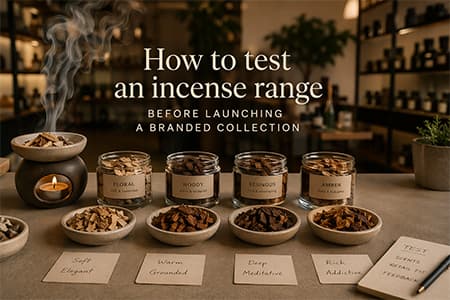
Artisan incense made from natural wood chips infused with fragrance, for example, communicates something different from a standard stick format. The raw material is more visible, the product story is more specific and the overall experience can feel more aligned with a higher-end retail narrative.
This kind of format may therefore suit retailers who want the category to feel more refined and less generic.
They can fit flexible sourcing models more easily
For retailers who are still building the category, alternative formats can also align well with more flexible sourcing approaches. A store may begin with a smaller curated range and refine the selection progressively instead of entering the category through a more rigid and highly standardized model.
Retailers exploring this kind of approach may find it useful to work with a wholesale incense supplier able to support a more selective and professional retail rollout.
From standardized products to a more curated offer
The shift away from traditional incense sticks is often not about abandoning the category, but about redefining it.
Retailers are building more intentional fragrance worlds
As stores become more selective, the fragrance category is also becoming more intentional. Retailers want products that fit their identity, support better storytelling and allow the incense offer to feel like part of a broader sensory universe.
That makes format choice much more strategic than it once was.
The category can evolve toward stronger exclusivity
Once retailers identify the scent directions and product formats that work best in-store, some choose to take the next step and develop a more distinctive range around their own positioning. This often leads naturally toward a more exclusive approach over time.
For businesses that reach that stage, a private label incense service can become part of the longer-term evolution of the category.
FAQ
Are retailers abandoning traditional incense sticks completely?
No. Incense sticks still have a place in the market. The shift is more about certain retailers looking for formats that feel more distinctive, more curated and better aligned with premium store identities.
Why do some stores see incense sticks as too standard?
Because the format is very familiar and widely distributed. In more curated retail spaces, that familiarity can make the category feel less exclusive or less visually distinctive.
What are retailers looking for instead?
They are often looking for products that feel more artisanal, more coherent with the store’s atmosphere and easier to position as part of a premium sensory experience.
Does product format really matter that much?
Yes. In premium retail, the format affects how the product is displayed, explained and perceived. It can influence whether the category feels generic or carefully curated.
Can this shift lead to private label projects later on?
Yes. Once the retailer has identified the right scent direction and the most suitable format, the category may later evolve toward a more exclusive and brand-led collection.
Share this article: